
The 2015 Hyundai Sonata’s comprehensive owner’s manual details operation, maintenance, safety, and specifications – a vital resource for all vehicle owners.
Overview of the Vehicle
The 2015 Hyundai Sonata, representing the LF generation, offers a blend of style, efficiency, and technology. Access to the official owner’s manual, readily available through Hyundai’s website and resources like the Internet Archive, is crucial for understanding its features.
This mid-size sedan provides a comfortable ride and a range of options, including a hybrid variant. The manual serves as a detailed guide to maximizing the vehicle’s potential, covering everything from basic operation to intricate system explanations. It’s a valuable tool for both new and experienced Sonata owners, ensuring safe and informed driving. Resources like Hyundai Forums also provide access to these essential documents.
Importance of the Owner’s Manual
The 2015 Hyundai Sonata owner’s manual isn’t merely a supplementary document; it’s an essential component of vehicle ownership. It provides critical insights into the car’s operation, maintenance schedules, and safety features, ensuring longevity and optimal performance.
Understanding the manual allows owners to address minor issues independently and interpret dashboard indicators correctly. Resources like the Internet Archive offer downloadable versions, while Hyundai’s official website provides a direct link to the PDF. Familiarizing yourself with this guide promotes safe driving practices and helps prevent costly repairs, ultimately enhancing the overall ownership experience.
Understanding Your Vehicle
The 2015 Sonata’s manual explains dashboard symbols, instrument cluster details, and interior controls, empowering owners with comprehensive vehicle knowledge and safe operation.
Dashboard Symbols and Indicators
The 2015 Hyundai Sonata’s instrument panel utilizes a variety of symbols and indicators to communicate crucial vehicle information to the driver. Understanding these visual cues is paramount for safe and informed operation. The owner’s manual provides a detailed explanation of each symbol, categorizing them by severity – warning lights, indicator lights, and malfunction indicator lamps.
Warning lights, typically red or amber, signify potentially serious issues requiring immediate attention, such as low oil pressure or engine malfunction. Indicator lights, often green or blue, confirm the operation of a system, like headlights or cruise control. Malfunction indicator lamps signal issues affecting emissions control. The manual emphasizes promptly addressing any illuminated warning light to prevent further damage or safety hazards. Familiarizing yourself with these indicators ensures a confident and secure driving experience.
Instrument Cluster Details
The 2015 Hyundai Sonata’s instrument cluster presents vital driving information in a clear and accessible format. Beyond the dashboard symbols, the cluster displays the speedometer, tachometer, fuel level, engine coolant temperature, and odometer. A multi-information display (MID) provides customizable data, including trip information, average fuel economy, and outside temperature.
The owner’s manual details how to navigate and customize the MID using steering wheel-mounted controls. Illumination adjustments are also explained, ensuring optimal visibility in various lighting conditions. Understanding the cluster’s layout and functions allows drivers to quickly and accurately monitor vehicle performance and status, contributing to a safer and more enjoyable driving experience. Proper use of the MID enhances driver awareness and convenience.
Controls and Features – Interior
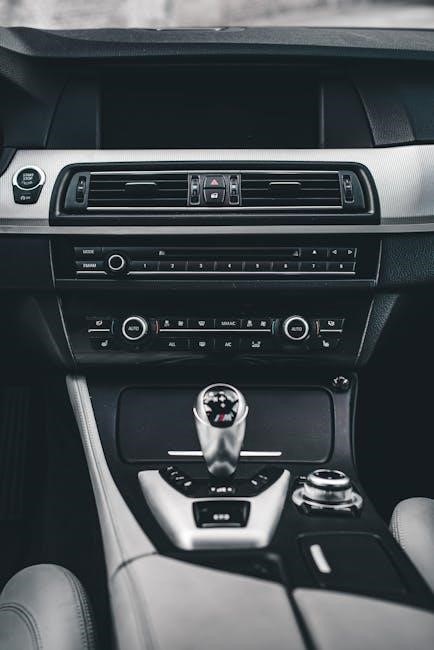
The 2015 Hyundai Sonata’s interior boasts a range of controls and features designed for comfort and convenience. The owner’s manual thoroughly explains the operation of the audio system, including radio, CD player, and auxiliary input. It details the climate control system, covering temperature adjustments, fan speed, and ventilation modes.
Power window and door lock controls, along with the operation of the sunroof (if equipped), are also covered. The manual provides instructions for utilizing the Bluetooth connectivity for hands-free calling and audio streaming. Furthermore, it explains the functionality of the available navigation system and other interior features, ensuring drivers can fully utilize the vehicle’s capabilities.

Operating Your 2015 Hyundai Sonata
The owner’s manual provides detailed guidance on starting, stopping, driving modes, and utilizing the climate control system for optimal performance.
Starting and Stopping the Engine
The 2015 Hyundai Sonata owner’s manual meticulously outlines the proper procedures for starting and safely shutting down the engine. It emphasizes ensuring the parking brake is engaged before starting, and the transmission is in ‘Park’.
Detailed instructions cover both standard key ignition and, if equipped, the push-button start system. The manual also addresses potential starting issues and provides troubleshooting tips.
Regarding stopping the engine, it stresses allowing it to idle briefly before switching it off, particularly after highway driving, to ensure proper lubrication. Furthermore, it cautions against prolonged idling and highlights the importance of completely turning off the ignition to prevent battery drain.
Driving Modes and Systems
The 2015 Hyundai Sonata owner’s manual thoroughly explains the vehicle’s various driving modes and advanced systems. Depending on the trim level, these may include Normal, Sport, and Eco modes, each altering throttle response and steering feel for optimized performance or fuel efficiency.
The manual details the functionality of systems like Vehicle Stability Management (VSM) and Electronic Stability Control (ESC), emphasizing their role in enhancing safety during challenging driving conditions.

It also provides clear explanations of features such as the Flex Steer system, allowing drivers to adjust steering effort, and any available driver-assist technologies, ensuring a comprehensive understanding of the Sonata’s capabilities.
Climate Control System
The 2015 Hyundai Sonata owner’s manual provides detailed instructions on operating the vehicle’s climate control system. It explains the functions of the automatic temperature control, allowing drivers and passengers to set desired cabin temperatures with ease.
The manual clarifies the operation of the ventilation system, including settings for airflow direction and fan speed. It also details the use of the air conditioning system, including recirculation mode for quicker cooling and improved air quality.
Furthermore, it covers features like heated and ventilated seats (if equipped), ensuring optimal comfort in various weather conditions, and explains maintenance procedures for the system.

Maintenance and Care
The 2015 Sonata manual outlines a recommended maintenance schedule, detailing fluid checks, replacements, and tire care for optimal vehicle performance and longevity.
Recommended Maintenance Schedule
The 2015 Hyundai Sonata owner’s manual provides a detailed maintenance schedule crucial for preserving vehicle reliability and performance. Regular inspections and servicing, as outlined, are categorized by mileage intervals.
These intervals cover essential checks like engine oil and filter changes, tire rotations, brake inspections, and fluid level assessments. The manual specifies when to replace components such as air filters, cabin air filters, spark plugs, and drive belts.
Adhering to this schedule helps prevent unexpected breakdowns, ensures optimal fuel efficiency, and maintains the vehicle’s resale value. The manual also highlights specific maintenance requirements for severe driving conditions, like frequent short trips or towing, which may necessitate more frequent servicing.
Fluid Checks and Replacements
The 2015 Hyundai Sonata owner’s manual emphasizes the importance of regularly checking and replacing vehicle fluids for optimal performance. Key fluids include engine oil, coolant, brake fluid, power steering fluid, and windshield washer fluid.
The manual details the proper procedures for checking fluid levels, ensuring they fall within the recommended ranges. It also specifies the correct type of fluid to use for each system, preventing damage from incompatible fluids.

Replacement intervals are outlined, noting when fluids should be completely drained and refilled. Proper fluid maintenance prevents corrosion, overheating, and component failure, contributing to the vehicle’s longevity and safe operation.
Tire Information and Maintenance
The 2015 Hyundai Sonata owner’s manual provides crucial tire information, including recommended tire sizes, load capacity, and inflation pressures. Maintaining correct tire pressure is vital for fuel efficiency, handling, and tire lifespan.
The manual details how to locate the recommended tire pressure (typically found on a sticker in the driver’s side doorjamb) and how to accurately check it using a tire pressure gauge. It also explains tire wear patterns and their potential causes, such as misalignment or improper inflation.
Rotation schedules are outlined to promote even wear, and guidance on inspecting tires for damage, like cuts or bulges, is provided for safety.

Safety Features and Procedures
The 2015 Sonata manual details airbag systems, proper seatbelt usage, and emergency assistance procedures, ensuring driver and passenger safety on every journey.
Airbag System
The 2015 Hyundai Sonata is equipped with an advanced airbag system designed to provide crucial protection during collisions. The owner’s manual thoroughly explains the system’s components, including frontal, side, and curtain airbags, detailing their specific deployment characteristics.
It emphasizes the importance of always wearing seatbelts in conjunction with airbags for optimal safety. The manual also provides critical warnings regarding airbag deployment, noting potential risks for children and individuals with certain medical conditions. Proper seating positions and modifications to the vehicle that could interfere with airbag function are also addressed.
Understanding the airbag system’s limitations and following the guidelines outlined in the manual are essential for maximizing safety in the event of an accident. The manual stresses that airbags supplement, but do not replace, the need for safe driving practices.
Seatbelt Usage
The 2015 Hyundai Sonata owner’s manual unequivocally stresses the critical importance of seatbelt usage for all occupants. It details the proper way to wear seatbelts, ensuring they are snugly fitted across the hips and shoulder, not the abdomen or neck.

The manual explains the seatbelt system’s features, including pre-tensioners and load limiters, designed to enhance protection during a collision. It provides specific guidance for children, emphasizing the use of appropriate child restraint systems based on age, weight, and height.
Warnings are prominently displayed regarding the dangers of improper seatbelt use and the potential for serious injury. The manual reinforces that seatbelts are the primary safety device and must be worn on every trip, regardless of distance.
Emergency Assistance
The 2015 Hyundai Sonata owner’s manual provides crucial information regarding emergency assistance procedures. It details steps to take in the event of an accident, including securing the vehicle, checking for injuries, and contacting emergency services.
The manual outlines the location of the hazard warning flashers and how to activate them to alert other drivers. It also explains the proper use of the emergency brake. Information regarding roadside assistance programs, potentially including Hyundai’s own services, is included.
Furthermore, the manual emphasizes the importance of having a well-stocked emergency kit in the vehicle, containing items like a first-aid kit, flares, and a flashlight, for unexpected situations.

Specifications
The 2015 Hyundai Sonata manual details engine specs, dimensions, capacities, and warranty details – essential technical information for vehicle understanding and ownership.
Engine Specifications
The 2015 Hyundai Sonata offered several engine options, comprehensively detailed within the owner’s manual. The standard engine was a 2.4L Inline-4, producing 185 horsepower and 178 lb-ft of torque. A more powerful 2.0L Turbocharged Inline-4 was also available, delivering 245 horsepower and 260 lb-ft of torque.
For those seeking enhanced fuel efficiency, a 1.6L Turbocharged Inline-4 engine generated 192 horsepower and 195 lb-ft of torque. Finally, the Sonata Hybrid featured a 2.0L Inline-4 paired with an electric motor, achieving a combined system output. The manual provides precise specifications for each engine, including compression ratios, fuel requirements, and recommended oil types, ensuring optimal performance and longevity.
Dimensions and Capacities
The 2015 Hyundai Sonata’s owner’s manual meticulously outlines its dimensions and capacities. Overall length measures 186.8 inches, with a width of 73.4 inches and a height ranging from 56.9 to 57.3 inches, depending on the trim.
The wheelbase is 109.3 inches, contributing to a spacious interior. Passenger volume reaches 106.3 cubic feet, while cargo capacity is a generous 16.3 cubic feet with the rear seats up, expanding to 55.3 cubic feet when folded. Fuel tank capacity is 18.5 gallons. Detailed diagrams and precise measurements are included, aiding in understanding the vehicle’s spatial characteristics and load-carrying abilities.

Warranty Information
The 2015 Hyundai Sonata owner’s manual thoroughly details the vehicle’s warranty coverage. Hyundai provides a 5-year/60,000-mile basic warranty, covering defects in materials and workmanship.
A 10-year/100,000-mile powertrain warranty protects the engine, transmission, and other key components. Additional warranties cover corrosion (5-year/unlimited miles) and emissions components (8-year/80,000 miles, depending on state regulations). The manual clearly explains what is covered, exclusions, and the process for filing a warranty claim, ensuring owners understand their rights and protections against potential vehicle issues.