This guide details techniques and criteria for multi-engine flight tests, used by examiners for class rating issuance, aiding instructors and pilots alike.
It supports pilot certification testing and training, focusing on prudent operation and safety within small multi-engine aircraft environments.
The document outlines procedures for maneuvers and emergency scenarios, ensuring a standardized evaluation process for multi-engine proficiency.
It’s designed to assist in explaining, visualizing, and executing maneuvers required for practical flight tests, both private and commercial.
Purpose of the Flight Test Guide
This comprehensive flight test guide serves as a crucial resource for both Civil Aviation Inspectors and Pilot Examiners during the multi-engine class rating assessment process. Its primary function is to establish a standardized and consistent evaluation framework, ensuring all candidates are assessed against the same rigorous criteria.
The guide details the specific techniques and procedures examiners will utilize, promoting fairness and objectivity. Furthermore, it’s intended to assist Flight Instructors in preparing students for the practical flight test, aligning training with official evaluation standards. Ultimately, the goal is to verify a pilot’s competency in safely and effectively operating multi-engine aircraft, upholding the highest levels of aviation safety.
Applicable Regulations and Standards
Multi-engine flight testing adheres to stringent regulations and standards established to ensure pilot proficiency and aviation safety. Examiners must conduct tests in accordance with Transport Canada’s TP 219E (01/2021) Flight Test Guide, specifically for the Multi-Engine Class Rating – Aeroplane.
This guide references applicable Canadian Aviation Regulations (CARs) and standards, outlining the required maneuvers and emergency procedures. Candidates must demonstrate competence in handling at least three specified emergencies/malfunctions relevant to the aircraft type. Adherence to these standards guarantees a consistent and legally compliant evaluation process, validating a pilot’s ability to operate multi-engine aircraft safely and effectively.
Pre-Flight Preparation
Thorough pre-flight involves reviewing aircraft documentation, calculating weight and balance, and analyzing performance data for safe multi-engine operation.
Aircraft Documentation Review
Prior to any multi-engine flight test, a meticulous review of all relevant aircraft documentation is paramount. This includes the Aircraft Flight Manual (AFM), which details performance limitations, emergency procedures, and operating characteristics specific to the aircraft model.
Inspect the maintenance logs to verify airworthiness and ensure all required inspections are current. Examine weight and balance records to confirm the aircraft is within prescribed limits.
Review the MEL (Minimum Equipment List) to understand any inoperative equipment and associated operational restrictions. Finally, verify that all required placards and markings are present and legible, contributing to a safe and legally compliant flight test.
Weight and Balance Calculations
Accurate weight and balance calculations are critical for multi-engine aircraft, significantly impacting performance and stability. Determine the aircraft’s empty weight and moment from official records.
Then, meticulously calculate the weight and moment of all items onboard, including fuel, oil, passengers, and baggage. Ensure these values are within the AFM’s prescribed limits.
Verify the center of gravity (CG) falls within the allowable range for all phases of flight. Improper weight distribution can lead to control difficulties and potentially hazardous situations; therefore, double-check all calculations.
Performance Data Analysis
Thorough performance data analysis is essential before any multi-engine flight test. Review the Aircraft Flight Manual (AFM) for takeoff distances, climb rates, cruise speeds, and landing distances under various conditions.
Consider factors like temperature, pressure altitude, runway length, and wind. Calculate required runway length for takeoff, accounting for potential engine failure scenarios.
Analyze climb performance to ensure adequate obstacle clearance. Verify cruise performance aligns with planned flight parameters. Accurate data interpretation is vital for safe and successful flight testing.
Engine Start and Taxi Procedures
Follow the specific multi-engine start sequence outlined in the AFM, ensuring proper engine synchronization and monitoring during taxi operations for safety.
Multi-Engine Start Sequence
The multi-engine start sequence demands meticulous adherence to the Aircraft Flight Manual (AFM) procedures. Typically, this involves starting one engine, allowing it to stabilize, then initiating the second.
Prior to start, verify propeller areas are clear and battery voltage is sufficient. Monitor engine instruments closely during start – oil pressure, fuel flow, and engine temperatures are critical.
Pay attention to any unusual sounds or indications, and be prepared to shut down immediately if necessary. After both engines are running, synchronize propeller speeds and conduct a thorough engine warm-up before taxiing.
Consistent application of checklists is paramount for a safe and efficient start.
Taxiing Techniques with Multiple Engines
Taxiing a multi-engine aircraft requires heightened awareness and precise control inputs. Utilize differential thrust – varying power to each engine – for steering, especially at slower speeds.
Maintain directional control with rudder pedals and gentle throttle adjustments. Be mindful of propeller wash and its effect on the aircraft’s tendency to weathervane.
Avoid abrupt control movements, which can lead to swerving or loss of control. Constant scanning for obstacles and other aircraft is crucial.
Practice smooth and coordinated taxiing to ensure safe ground operations.
Run-up Procedures – Multi-Engine Specifics
Multi-engine run-ups demand a systematic approach, verifying each engine’s functionality independently. Begin with a thorough static engine run-up, checking magnetos, propeller controls, and mixture settings on each engine sequentially.
Monitor engine instruments closely for any anomalies – oil pressure, temperature, and RPM. Perform a thorough check of all systems, including electrical and hydraulic components.
Pay close attention to asymmetric thrust during the run-up. Verify proper operation of the feathering system, if equipped, and ensure all indications are within limits.
Document all findings and address any discrepancies before flight.
Takeoff and Initial Climb
Briefings cover V-speeds, emergency procedures, and expected performance. Proper application of these speeds is crucial, alongside preparedness for engine failure scenarios.
Multi-Engine Takeoff Briefing
A thorough multi-engine takeoff briefing is paramount for safety and standardization. This briefing must clearly articulate expected airspeeds – V1, Vr, and V2 – and their significance in relation to the aircraft’s performance capabilities.
The pilot-in-command should detail the planned procedure for dealing with an engine failure at various points during the takeoff roll and initial climb. This includes identifying the immediate actions, such as rudder control and power adjustments, and the subsequent steps for maintaining directional control and achieving a safe climb gradient.
Furthermore, the briefing should cover any specific airport conditions or environmental factors that may affect the takeoff, such as wind shear or runway contamination, and how these factors will be addressed. Clear communication and a shared understanding of the plan are essential for a successful and safe takeoff.
V-Speeds and Their Application
V-speeds are critical for a safe multi-engine takeoff, demanding precise understanding and application. V1, the decision speed, dictates commitment to the takeoff; continuing beyond V1 is mandatory even with an engine failure.
Vr, the rotation speed, signifies initiating the aircraft’s pitch for takeoff. Accurate Vr determination is vital for achieving the optimal climb angle.
V2, the takeoff safety speed, ensures adequate climb performance with one engine inoperative. Maintaining V2 is crucial for obstacle clearance and continued flight.
These speeds are calculated based on weight, altitude, and temperature, and must be referenced from the aircraft’s performance charts during the takeoff briefing and execution.
Engine Failure During Takeoff – Procedures
Engine failure during takeoff requires immediate, decisive action. Before V1, reject the takeoff using maximum braking and reverse thrust if available.
After V1, maintain directional control with rudder and continue the takeoff. Immediately establish best single-engine climb speed (Vmc) and configure for climb.
Positive rate of climb is paramount; retract landing gear and flaps as appropriate, monitoring airspeed and engine parameters.
Communicate the emergency, and prepare for a potential return to the airport or diversion to a suitable landing site, prioritizing aircraft control and safety.
In-Flight Maneuvers
Multi-engine maneuvers demand precise coordination, considering unique factors like asymmetric thrust and increased complexity during slow flight and steep turns.
Slow Flight – Multi-Engine Considerations
Maintaining airspeed at the lower end of the operating range in a multi-engine aircraft requires heightened pilot awareness and precise control inputs. Unlike single-engine operations, asymmetric thrust becomes a critical factor, demanding proactive rudder control to counteract yaw and maintain coordinated flight.
Power management is also crucial; careful adjustments to engine throttle settings are necessary to avoid stalling one engine before the other, potentially leading to control difficulties.
Pilots must be prepared for increased drag and a reduced rate of climb, while diligently monitoring engine instruments for any anomalies.
Effective slow flight demonstrates a pilot’s ability to manage the unique challenges presented by multiple engines, ensuring safe and controlled operation at reduced airspeeds.
Steep Turns – Coordinating Multiple Engines
Performing steep turns in a multi-engine aircraft demands precise coordination between aileron, rudder, and engine power to maintain control and prevent adverse yaw. The increased power required to sustain altitude during a steep bank can exacerbate asymmetric thrust effects, necessitating continuous rudder input.
Pilots must anticipate and counteract these forces, ensuring a smooth and coordinated turn without significant deviations in heading or altitude.
Monitoring engine instruments is vital, verifying that both engines are operating within prescribed limits throughout the maneuver.
Successful steep turns demonstrate proficiency in managing the complexities of multi-engine control, showcasing a pilot’s ability to maintain a stable flight path under demanding conditions.
Acceleration and Deceleration
Multi-engine acceleration and deceleration maneuvers assess a pilot’s ability to smoothly and efficiently manage power and pitch adjustments while maintaining aircraft control. Precise throttle control is crucial, avoiding abrupt changes that could induce engine instability or asymmetric thrust issues.
Pilots must demonstrate a clear understanding of how power settings affect airspeed and aircraft performance, maintaining coordinated flight throughout the acceleration and deceleration phases.
Monitoring engine instruments is essential, ensuring both engines remain within operational limits during these dynamic maneuvers.
These exercises validate a pilot’s skill in controlling the aircraft’s energy state, a fundamental aspect of safe and effective multi-engine operation.
Emergency Operations
This section covers critical procedures for engine failures at various flight phases, including takeoff, climb, and cruise, emphasizing checklist adherence and swift action.
Engine Failure After Takeoff
Engine failure immediately after takeoff presents a particularly challenging scenario. The pilot must swiftly identify the failed engine and immediately apply the appropriate emergency checklist procedures.
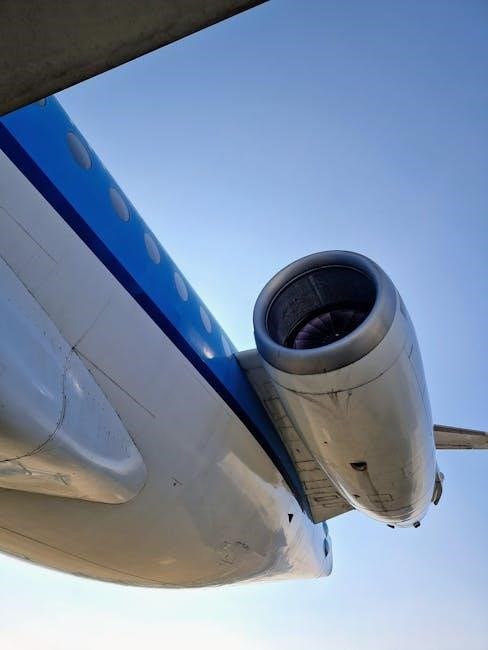
Maintaining aircraft control is paramount, requiring precise rudder input to counteract asymmetric thrust. Critical actions include verifying the failed engine, securing it properly, and establishing a single-engine climb profile.
The pilot must assess altitude and distance to suitable landing areas, prioritizing a safe return to the airport or a suitable emergency landing site.
Proper execution of these procedures demonstrates the pilot’s ability to handle a critical emergency and maintain control of the aircraft under adverse conditions, as outlined in the flight test guide.
Engine Failure During Climb
An engine failure during the climb phase requires immediate and decisive action. The pilot must quickly identify the inoperative engine and initiate the emergency checklist.
Maintaining airspeed is crucial, as a reduced airspeed can exacerbate the situation and increase the risk of a stall. Simultaneous application of rudder and aileron is necessary to counteract asymmetric thrust.
The pilot must establish a single-engine climb, evaluating performance and determining the feasibility of continuing to the intended destination or diverting to a suitable airport.
This scenario tests the pilot’s ability to manage a critical emergency while maintaining aircraft control and making sound judgment decisions, per the flight test guide.
Engine Failure During Cruise Flight
Engine failure in cruise flight demands a systematic response, prioritizing aircraft control and situational awareness. Immediate actions include identifying the failed engine and securing it according to the checklist.
Maintaining altitude is paramount initially, followed by establishing single-engine cruise performance. The pilot must assess the aircraft’s capabilities and plan accordingly.
Considerations include drift-down distance, available suitable landing fields, and weather conditions. Proper communication with air traffic control is essential to declare an emergency and request assistance.
This tests the pilot’s ability to handle an unexpected event while maintaining safe flight operations, as detailed within the multi-engine flight test guide.

Systems Malfunctions
Flight tests assess pilot response to electrical, hydraulic, and de-icing/anti-icing failures, verifying adherence to emergency checklists and procedures for safe operation.
Electrical System Failure
During a multi-engine flight test, simulating an electrical system failure requires the candidate to demonstrate proficiency in identifying the malfunction and implementing appropriate corrective actions. This includes utilizing emergency checklists to isolate the failed component and switching to alternate power sources, such as the auxiliary power unit (APU) or individual engine-driven generators.
The examiner will assess the pilot’s ability to maintain control of the aircraft while operating with reduced electrical systems, prioritizing essential functions like flight controls, navigation, and communication. Proper understanding of electrical system architecture and limitations is crucial. The test verifies safe operation and adherence to established procedures during such emergencies.
Hydraulic System Failure
A simulated hydraulic system failure during the multi-engine flight test evaluates the candidate’s ability to maintain aircraft control utilizing alternative control methods. This often involves switching to manual reversion controls for flight surfaces like ailerons, elevators, and rudder, demonstrating smooth and coordinated operation.
The examiner assesses the pilot’s understanding of the hydraulic system’s impact on flight controls and their proficiency in transitioning to backup systems. Proper checklist usage and awareness of altered control feel are key. The test confirms the pilot can safely manage the aircraft and complete the flight, even with compromised hydraulic functionality.
De-icing/Anti-icing System Malfunctions
The flight test assesses the pilot’s response to simulated de-icing or anti-icing system malfunctions, crucial for operations in icing conditions. This evaluates their understanding of the systems’ operation and the impact of failure on aircraft performance and safety.
The examiner will observe the pilot’s ability to recognize the malfunction, apply appropriate procedures, and make informed decisions regarding continued flight or diversion. Proper checklist usage, awareness of icing accumulation, and adherence to operational limitations are vital. The test confirms the pilot can mitigate risks associated with icing.
Landing Procedures
Evaluates normal, short-field landings, and go-arounds, specifically testing engine failure scenarios during approach and landing phases for safe execution.
Normal Landing – Multi-Engine Approach
The multi-engine approach and landing assesses the pilot’s ability to maintain precise control and adhere to established procedures. Examiners will observe a stabilized approach, utilizing appropriate airspeed and descent rate, demonstrating proficiency in managing both engines during normal operations.
Proper configuration management, including flap settings and landing gear deployment, is crucial. The pilot must exhibit smooth and coordinated control inputs throughout the final approach, maintaining centerline alignment and a consistent glide path.
A successful landing demonstrates a controlled touchdown, followed by effective use of braking and steering to maintain directional control during the rollout. The entire maneuver reflects a thorough understanding of multi-engine aircraft handling characteristics.
Short Field Landing – Multi-Engine Techniques
The short field landing evaluates the pilot’s ability to minimize landing distance while maintaining control and safety. This requires precise airspeed control, utilizing maximum flap settings, and a stabilized approach to the designated touchdown point.
Effective use of slip techniques is critical for managing descent rate and maintaining alignment. Examiners assess the pilot’s ability to execute a smooth and controlled flare, minimizing float and ensuring a precise touchdown within the available runway length.
Prompt and effective braking, coupled with directional control, demonstrates proficiency in maximizing stopping performance. This maneuver highlights the pilot’s understanding of multi-engine aircraft limitations in constrained environments.
Go-Around Procedures – Engine Failure Scenario
This test assesses the pilot’s response to a simulated engine failure during the approach to landing. A prompt and correct execution of the go-around procedure is paramount, demonstrating proficiency in maintaining aircraft control and ensuring safety.
The pilot must immediately apply full power on the operative engine, establish the appropriate climb attitude, and configure the aircraft for continued flight. Proper rudder control is vital to counteract asymmetric thrust.
Clear communication with air traffic control is essential, declaring the emergency and requesting assistance; The examiner evaluates the pilot’s ability to calmly and effectively manage the situation, prioritizing aircraft control and safety.
Performance Evaluation
This section assesses climb/descent rates, cruise performance, and stall speeds, verifying the aircraft operates within established limits and pilot understanding.
Rate of Climb and Descent
Evaluating rate of climb is crucial for determining multi-engine aircraft performance, specifically assessing its ability to gain altitude efficiently under various conditions. The flight test will involve establishing and maintaining specific climb rates at designated airspeeds, verifying adherence to published performance charts.
Conversely, descent rates are assessed to ensure controlled and predictable descents, vital for maintaining situational awareness and safe approaches. Examiners will observe the pilot’s ability to manage descent rates accurately, considering factors like weight, configuration, and wind conditions.
Accurate performance data interpretation is key, demonstrating a thorough understanding of the aircraft’s capabilities and limitations during both climb and descent phases of flight.
Cruise Performance
Assessing cruise performance involves evaluating the aircraft’s efficiency at maintaining a specified airspeed and altitude over a sustained period. The flight test will focus on determining true airspeed, fuel consumption, and power settings required for optimal cruise efficiency.
Pilots must demonstrate the ability to accurately calculate and maintain cruise performance parameters, considering factors like weight, altitude, and temperature. This includes verifying alignment with published performance data and adjusting power settings accordingly.
Understanding cruise performance is vital for flight planning and endurance calculations, ensuring safe and efficient operation on longer flights.
Stall Speed Determination
Determining stall speed is crucial for safe multi-engine operation, requiring precise control and adherence to established procedures. The flight test involves slowly decreasing airspeed at a constant angle of attack until a stall occurs.
Pilots must accurately identify the stall warning and recover promptly, maintaining aircraft control throughout the maneuver. This includes recognizing the aerodynamic effects of a stall and applying appropriate corrective actions.
Accurate stall speed knowledge is essential for understanding aircraft limitations and ensuring safe operation within the flight envelope.
Post-Flight Procedures
Following the flight, a specific engine shutdown sequence must be adhered to, alongside securing the aircraft and completing all necessary documentation.
A thorough debriefing and test evaluation are vital for continuous improvement and safety enhancement.
Engine Shutdown Sequence
A standardized engine shutdown sequence is crucial for multi-engine aircraft, prioritizing safety and preventing potential issues. Typically, this begins with reducing power levers to idle, followed by verifying propeller feathering positions.
Mixture controls are then adjusted to cutoff, and ignition switches are turned off, ensuring complete fuel shutoff to each engine.
Master switches and battery switches are switched off in a specific order, often dictated by the aircraft’s Pilot Operating Handbook (POH).
Finally, external power is disconnected, and parking brakes are set, completing the shutdown process and securing the aircraft for post-flight inspection.
Aircraft Security and Documentation
Post-flight aircraft security is paramount, encompassing control lock installation, securing all hatches and doors, and ensuring the removal of all personal belongings. Proper documentation is equally vital, including accurately recording flight times, fuel usage, and any discrepancies noted during the flight test.
All test data, checklists, and relevant forms must be completed and submitted according to established procedures.
The aircraft logbooks should be updated to reflect any maintenance performed or issues identified during the testing process, maintaining a comprehensive record.
Debriefing and Test Evaluation
A thorough debriefing is crucial post-flight, encompassing a detailed review of performance against established standards and marking criteria. This evaluation should cover all maneuvers and emergency procedures executed during the multi-engine flight test.
Constructive feedback is essential, highlighting strengths and areas for improvement, ensuring a comprehensive understanding of the pilot’s capabilities.
Documentation of the evaluation, including any discrepancies or concerns, is vital for maintaining training records and ensuring continued proficiency.