
Criminal Investigation: Navigating the 11th Edition & Free Access (2026)
Seeking the latest Criminal Investigation resources? The demand for updated materials is high, especially with the 2026 edition looming, prompting searches for a potential pdf version․
Understanding the Demand for Criminal Investigation Resources
The persistent search for a “free” Criminal Investigation 11th edition pdf reflects a significant demand within the criminal justice academic community and among law enforcement professionals․ Students often face substantial textbook costs, driving the desire for accessible, no-cost alternatives․ Professionals seek updated resources to stay current with evolving investigative techniques and legal precedents․
This demand is further fueled by the dynamic nature of criminal investigation itself․ New technologies, forensic methods, and legal interpretations constantly emerge, necessitating frequent updates to core texts․ The 11th edition promises to incorporate these advancements, making it a highly sought-after resource․ Consequently, the allure of a freely available pdf is understandable, despite potential legal and ethical concerns surrounding unauthorized distribution․
However, it’s crucial to acknowledge the value of legitimate access to ensure accurate and reliable information for effective criminal justice practices․
The 11th Edition: Key Updates and Features

While details remain largely undisclosed prior to its full release, the 11th edition of Criminal Investigation is anticipated to feature substantial updates reflecting the latest advancements in forensic science and investigative methodologies․ Expect expanded coverage of digital forensics, including data extraction and analysis techniques, crucial in modern criminal cases․
Furthermore, the edition will likely incorporate recent legal rulings and their impact on investigative procedures, ensuring students and professionals are well-versed in current legal standards․ Enhanced sections on victimology and offender profiling are also probable, reflecting a growing emphasis on behavioral analysis․ The integration of virtual autopsy (Virtopsy) as evidence, alongside its legislative aspects, is a likely addition․
These improvements aim to provide a comprehensive and cutting-edge resource for anyone involved in the pursuit of justice․

Locating a “Free” PDF of the 11th Edition
The pursuit of a “free” Criminal Investigation 11th edition PDF is common, yet fraught with legal and ethical concerns regarding copyright infringement․
Legality and Ethical Considerations of Free Downloads
Downloading a copyrighted textbook like Criminal Investigation’s 11th edition PDF without proper authorization presents significant legal ramifications․ Copyright law protects the author and publisher’s rights, making unauthorized distribution and access illegal; Ethically, obtaining materials without payment undermines the creators’ livelihood and the publishing industry’s sustainability․
Circumventing purchase requirements through unofficial channels contributes to a culture of intellectual property disregard․ Students relying on illegally obtained resources may also be violating academic integrity policies; Furthermore, supporting such practices discourages the creation of future educational materials․ Legitimate access options, such as library resources or official purchase, respect intellectual property rights and ensure continued quality content․
Risks Associated with Unofficial PDF Sources (Malware, Inaccurate Content)
Seeking a “free” Criminal Investigation 11th edition PDF from unofficial sources exposes users to substantial risks․ These downloads frequently harbor malware, including viruses and spyware, compromising your device and personal data․ Beyond malicious software, the content itself may be inaccurate, outdated, or incomplete, hindering effective learning and potentially leading to misinformation․
Unofficial PDFs often lack the quality control of legitimate publications, containing errors in text, diagrams, or case studies․ Reliance on such flawed materials can negatively impact academic performance and professional understanding․ The potential for compromised security and unreliable information far outweighs the perceived benefit of avoiding purchase costs․ Prioritize official, verified sources to safeguard your digital wellbeing and ensure accurate learning․
Official Sources & Potential Access Options (Library, Course Materials)
Accessing the Criminal Investigation 11th edition through official channels is the safest and most reliable approach․ University and college libraries frequently stock required textbooks, offering physical copies or digital access via library databases․ Students enrolled in relevant courses may find the PDF included as part of course materials, provided by the instructor or through a learning management system․
Publisher websites sometimes offer digital versions for purchase or rental; Exploring legitimate online bookstores is another viable option․ While a completely “free” legal PDF is unlikely, these avenues ensure authentic content and support the authors․ Consider used textbook marketplaces for cost-effective alternatives․ Prioritizing official sources guarantees accuracy and avoids the risks associated with unofficial downloads․

Criminal Mastermind Challenges & GTA Online
GTA Online’s Criminal Mastermind Challenge can unexpectedly reset and is prone to bugs; preventative measures involve public lobbies and careful planning room coordination․
The Criminal Mastermind Challenge in GTA Online: Overview
The Criminal Mastermind Challenge, a component of the Doomsday Heist in Grand Theft Auto Online, presents players with a series of escalating objectives designed to test their cooperative skills and strategic thinking․ Upon failing any stage of the challenge, all participating players receive a notification: “The Criminal Mastermind Challenge has been failed․” This challenge is particularly interesting when considering player counts, as the Fleeca Job, requiring only two players, necessitates dividing a four-player team into two separate duos;
Successfully navigating the challenge unlocks substantial rewards, including significant RP and cash payouts․ However, players frequently report instability and random resets, highlighting the need for proactive measures to mitigate potential disruptions․ Understanding the challenge’s mechanics and potential pitfalls is crucial for maximizing efficiency and avoiding frustrating setbacks during gameplay․
Challenge Reset & Bug Prevention Strategies
To combat the frustrating random resets and bugs plaguing the Criminal Mastermind Challenge in GTA Online, a specific workflow is recommended․ Players should initially complete all preparatory missions within a public lobby․ Subsequently, transition to an invite-only session specifically for the setup and finale stages․ Crucially, ensure all CEO or MC members are present within the planning room before initiating the challenge․
This meticulous approach aims to stabilize the session and minimize the likelihood of unexpected interruptions․ While not a guaranteed solution, this method has proven effective for many players seeking to complete the challenge without losing progress․ Consistent application of these preventative measures can significantly enhance the overall experience and reduce frustration․
Payout Mechanics for Doomsday Heist Criminal Mastermind
Regarding the substantial 10 million payout offered within the Doomsday Heist’s Criminal Mastermind challenge, clarification is needed․ The reward isn’t a repeatable bonus for each of the three player-count variations․ Instead, the 10 million payout is a one-time achievement․ Players can only receive this maximum reward once, regardless of completing the challenge with different team sizes․
Successfully completing each of the three challenges – tailored for varying player counts – unlocks associated rewards, but the 10 million bonus remains singular․ Understanding this mechanic is crucial for managing expectations and optimizing heist strategies for maximum profitability․ Careful planning and execution are key to securing the highest possible earnings․

Criminal Justice Degrees & Career Paths
Considering a career in law enforcement? A Bachelor of Criminal Justice offers pros and cons, while alternative degrees may better suit aspiring police officers’ needs․
Bachelor of Criminal Justice: Pros and Cons
A Bachelor of Criminal Justice degree presents a multifaceted pathway for those aiming for careers within the legal system․ On the positive side, the curriculum provides a broad understanding of law enforcement, the court system, and correctional facilities, equipping graduates with valuable analytical and critical thinking skills․ This foundational knowledge is highly sought after by agencies like the FBI, DEA, and local police departments․
However, potential drawbacks exist․ Some argue the degree is too general, lacking the specialized skills employers increasingly desire․ Many aspiring police officers find alternative degrees, such as those in political science or public administration, offer more focused training and career flexibility․ Furthermore, a Criminal Justice degree doesn’t guarantee employment, and competition for positions can be fierce․ Careful consideration of career goals and alternative educational paths is crucial before committing to this degree․
Alternative Degree Options for Aspiring Police Officers
While a Criminal Justice degree is a common choice, several alternative academic paths can effectively prepare individuals for a career in law enforcement․ Political Science offers a strong foundation in government, policy, and legal frameworks, providing a broader understanding of the systems officers operate within․ Public Administration focuses on the management and operation of public services, valuable for leadership roles within police departments․
Sociology provides insights into social behavior and crime patterns, enhancing an officer’s ability to understand community dynamics․ Psychology equips officers with skills in crisis intervention and understanding human behavior․ These degrees often offer more versatile skillsets, potentially opening doors to diverse career options beyond policing․ Ultimately, the “best” degree depends on individual career aspirations and departmental requirements․

Criminal Profiling & Behavioral Analysis
Elite profilers meticulously analyze dangerous criminal minds, striving to anticipate future actions before they occur, mirroring the focus of the TV show Criminal Minds․
The Role of Profilers in Criminal Investigations
Criminal profilers play a crucial, yet often misunderstood, role in modern investigations․ They don’t possess psychic abilities, but rather employ behavioral science, criminology, and forensic psychology to develop detailed assessments of likely offender characteristics․ This includes estimations of age, gender, race, occupation, and even potential psychological traits․

These profiles aren’t intended to pinpoint a specific suspect, but to narrow the field of investigation, guiding law enforcement towards individuals who fit the predicted pattern․ Profilers analyze crime scene evidence – not just physical clues, but also the modus operandi (MO) and the offender’s signature – to infer personality and behavioral tendencies․
The information gleaned assists in interview strategies, suspect surveillance, and overall investigative direction․ While popularized by shows like Criminal Minds, real-world profiling is a complex, data-driven process, often used in conjunction with other investigative techniques․
Criminal Minds: TV Show & Real-World Applications
The television series Criminal Minds has significantly shaped public perception of criminal profiling, often portraying a highly dramatized and accelerated version of the process․ While entertaining, the show frequently deviates from the realities of investigative work․ Real-world profiling is far more methodical and relies heavily on statistical analysis and established psychological principles․
Despite the fictionalized portrayal, Criminal Minds has sparked public interest in forensic behavioral science and the complexities of the criminal mind․ It’s important to recognize the distinction between television drama and the rigorous, evidence-based practices employed by actual profilers․
However, the show’s popularity has indirectly benefited the field by raising awareness and potentially encouraging students to pursue careers in criminology and related disciplines, contributing to a growing pool of skilled investigators․

International Criminal Investigation
Global investigations necessitate cooperation, focusing on terrorist offences and serious crimes; data processing authority plays a crucial role in these complex, cross-border inquiries․
Investigating Terrorist Offences & Serious Crimes
International criminal investigations involving terrorism and serious crimes demand a nuanced approach, often requiring collaboration between multiple jurisdictions and agencies․ These investigations frequently transcend national borders, necessitating adherence to international laws and treaties․ The authority of the Member State responsible for processing data becomes paramount, ensuring legal compliance and protecting individual rights throughout the investigative process․
Effective investigation relies heavily on secure data sharing, intelligence gathering, and meticulous evidence collection․ Challenges include navigating differing legal frameworks, language barriers, and political sensitivities․ Successfully prosecuting these crimes requires a deep understanding of the motivations behind them, the networks involved, and the methods employed․ The complexities are further amplified by the evolving nature of terrorist tactics and the increasing sophistication of criminal organizations․
Data Processing Authority in Criminal Investigations
The authority of the Member State responsible for processing data is crucial in modern criminal investigations, particularly those involving cross-border elements․ This authority ensures compliance with data protection regulations, such as GDPR, while balancing the need for effective law enforcement․ Establishing clear protocols for data access, storage, and sharing is paramount to maintain the integrity of investigations and safeguard individual privacy․
Effective data processing requires robust security measures to prevent unauthorized access and data breaches․ The designated authority oversees these measures, ensuring adherence to legal standards and best practices․ This includes implementing appropriate encryption, access controls, and audit trails․ Furthermore, the authority plays a vital role in resolving disputes related to data processing and providing guidance to investigative teams․
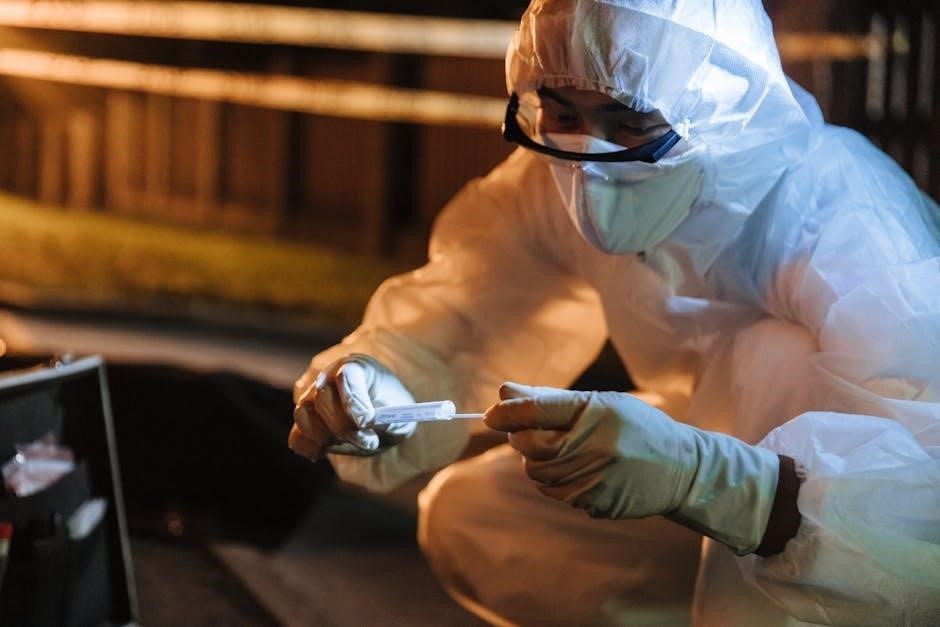
Forensic Science & Criminal Investigation
Virtopsy, or virtual autopsy, increasingly serves as compelling evidence in criminal cases, offering detailed 3D reconstructions and minimizing invasive procedures․
Virtual Autopsy (Virtopsy) as Evidence in Criminal Cases
Virtopsy represents a revolutionary advancement in forensic science, utilizing imaging technologies like CT scans and MRI to perform autopsies virtually․ This non-invasive technique offers several advantages over traditional methods, including detailed 3D reconstructions of injuries, allowing for precise analysis of trauma mechanisms․
The process generates comprehensive documentation, enhancing evidence presentation in court․ Virtopsy can reveal subtle injuries often missed during conventional autopsies, proving crucial in complex criminal investigations․ Furthermore, it preserves the integrity of the body, respecting cultural or religious sensitivities;
Its application extends to cases involving skeletal remains or decomposed bodies, where traditional autopsy is challenging․ The technology’s increasing acceptance by legal systems signifies its growing role in modern criminal justice, providing a powerful tool for investigators and forensic experts․
Legislative Aspects of Virtopsy Evidence
Introducing Virtopsy evidence into criminal proceedings necessitates careful consideration of legislative frameworks․ Legal acceptance varies globally, with some jurisdictions requiring specific protocols for admissibility․ Establishing the reliability and accuracy of Virtopsy findings is paramount, demanding adherence to standardized procedures and quality control measures․
Chain of custody for digital imaging data must be meticulously maintained to prevent tampering or challenges to authenticity․ Expert testimony is crucial to explain the technology and interpret the results for judges and juries․
Current legal debates center on the weight given to Virtopsy evidence compared to traditional autopsy findings, and the potential for discrepancies․ Ongoing research and legislative updates are vital to ensure the responsible and effective integration of this innovative forensic technique into the criminal justice system․

Distinguishing Penal and Criminal Law
Penal law defines offenses and punishments, while criminal law encompasses the entire process—investigation, prosecution, and adjudication—of those offenses․
Penal Law vs․ Criminal Law: Definitions
Penal law, often referred to as the “penalty law” or “criminal code,” specifically outlines the crimes recognized by a jurisdiction and the corresponding punishments assigned to each offense․ It’s a focused subset dealing directly with prohibited conduct and its consequences․ Historically, and in some legal systems today, it’s synonymous with “criminal law․”
Criminal law, however, is a broader field․ It encompasses not only the definition of crimes (covered by penal law) but also the entire legal process—from the initial investigation of a suspected crime, through arrest and pre-trial procedures, the trial itself, potential appeals, and finally, sentencing and corrections․ It includes rules of evidence, constitutional protections for the accused, and procedural safeguards․ Essentially, criminal law is the overarching framework within which penal law operates․
Modern Chinese legal terminology distinguishes them further, with “criminal law” (xingfa) being the broader term, while “penal law” focuses specifically on punishments․
Historical Context of Criminal Law Terminology
Historically, the terms “penal law” and “criminal law” weren’t always distinctly differentiated․ Before the 19th century, particularly within Continental European legal systems, “criminal law” was the common designation for what we now categorize as both․ Similarly, English legal tradition largely used “criminal law” encompassing both the definition of offenses and the procedural aspects․
The divergence began with the increasing complexity of legal systems and the need for clearer categorization․ As legal scholarship advanced, a distinction emerged, recognizing penal law as the specific body of rules defining crimes and punishments, while criminal law broadened to include the entire process of justice․
This evolution is reflected in varying terminology across different nations and eras․ Modern Chinese law, for instance, explicitly separates xingfa (criminal law) as the overarching field, with a specific focus on penalties․