Foundations of Army Ground Guide Visual Signals
Army ground guide visual signals rely on arm‑and‑hand, flag, pyrotechnic, and light devices per FM 21‑60. Soldiers simulate engine cranking with a right‑arm circle to signal right, left arm for left, and extend both arms for stop. Training uses courses like 88M12A08. and night operations. for all units. Daily. 26.!
1.1 Definition and Scope
Army ground guide visual signals are standardized hand‑and‑arm, flag, pyrotechnic, and light cues that convey movement commands to vehicles and personnel during day or night operations. The doctrine, codified in FM 21‑60, defines each signal’s shape, orientation, and duration, ensuring unambiguous interpretation across units. The scope covers all ground vehicles, from armored personnel carriers to convoys, and extends to mounted and dismounted troops who must interpret or execute the signals in real‑time. Signal designers use a consistent alphabet of gestures: a right‑arm circle for “turn right,” a left‑arm circle for “turn left,” a double‑arm extension for “stop,” and a close‑up gesture to bring a vehicle to a halt near a target. Light devices—chemical sticks, flashlights, and portable LED panels—augment hand signals when visibility is limited, while pyrotechnic flares provide long‑range confirmation. Training courses such as 88M12A08‑1 teach these signals in both classroom and field settings, emphasizing muscle memory, timing, and situational awareness. The scope also includes coordination with air traffic control and signal repeaters to maintain continuous communication in complex environments.
Additional context: The signals are practiced daily in both training environments and real operations, ensuring that all personnel can recognize and respond to each cue promptly, thereby maintaining operational tempo and safety across diverse terrains.
These visual cues are integral to maintaining unit cohesion and ensuring mission success during mission.
1.2 Doctrine and Regulations
Army ground guide visual signals are governed by FM 21‑60, which establishes the standard alphabet of hand‑and‑arm, flag, pyrotechnic, and light signals for vehicle guidance. The manual specifies posture, movement, and duration for each cue, ensuring uniform interpretation across units. The doctrine emphasizes clear intent, visibility, and execution within time limits. Training courses such as 88M12A08‑1 incorporate these regulations into classroom and live‑field exercises, reinforcing consistency and precision. Regulations also address auxiliary devices—chemical light sticks, flashlights, and portable LED panels—when visibility is compromised, prescribing correct lighting angles and durations. FM 21‑60 mandates coordination with air traffic control and ground‑to‑air protocols to maintain situational awareness during joint operations. Compliance is verified through inspections and proficiency tests, ensuring soldiers can reliably interpret and execute visual signals under diverse conditions.
Regulatory guidance references AR 350‑1 and AR 350‑2, outlining commanding officer responsibilities for signal proficiency. All vehicle crews must receive at least 20 hours of hands‑on training and pass a written test before deployment. Regulations require signal repeaters—mounted on vehicles or fixed positions—to be calibrated for correct light intensity and color temperature. Night operations demand infrared‑compatible devices, and the doctrine specifies safe distances between signalers and illuminated targets to prevent glare. Compliance is monitored through quarterly proficiency audits by the Army Signal Corps, and deficiencies are remedied with additional courses. These standards guarantee that visual signals remain reliable tools for coordination and safety across all Army ground operations and are updated annually to sustain mission readiness.
1.3 Key Signal Types
Arm‑and‑hand signals are the backbone of ground‑guide communication. The right‑hand turn cue consists of a clockwise arm circle, while the left‑hand turn uses a counter‑clockwise motion. The stop signal is given by extending both arms straight ahead, palms facing forward, and holding for a full second. The close‑up signal involves raising both arms parallel to the ground, palms upward, then moving them upward and inward toward the head. These gestures are standardized in FM 21‑60 and taught in 88M12A08‑1 courses; Flag signals supplement arm cues in low‑visibility scenarios; a red flag held vertically indicates stop, a green flag held horizontally signals go, and a white flag with a diagonal stripe warns of danger. Pyrotechnic signals are employed for nighttime or obscured environments; a single flare in the right field of view signals right, a flare in the left field signals left, and a burst of white flares indicates stop. Light signals use portable LED panels or flashlights; a steady beam to the right confirms a right turn, a steady beam to the left confirms left turn, and a strobe pattern signals stop. All devices must be calibrated for color temperature and intensity per AR 350‑1, ensuring visibility at distances up to 300 m. The Army’s Signal Corps maintains a database of approved devices, and crews receive quarterly proficiency checks to validate correct usage. These key signal types form the core vocabulary for safe and efficient vehicle coordination on the battlefield. Continuous review of signal proficiency ensures operational readiness and reduces miscommunication!!
Execution of Standard Ground‑Guide Signals
Standard ground‑guide signals employ arm‑and‑hand motions: right turn is a clockwise arm circle; left turn counter‑clockwise; stop extends both arms forward, holding 1 s. Close‑up raises arms, palms up, then pulls inward. All follow FM 21‑60. Practice ensures.
2.1 Right‑Hand Turn Signal
Right‑hand turn signal is executed by simulating engine cranking with the right arm. The guide extends the right arm fully, elbow locked, hand clenched into a fist. The arm is then moved in a clockwise circular motion in front of the body, completing one full rotation. The motion should be smooth, deliberate, and visible to the vehicle operator. The signal is held for one second after completing the circle before returning the arm to the neutral position. This gesture is used in both daylight and nighttime operations, often supplemented by a light source such as a flash‑light or chemical light stick to enhance visibility. The signal is standardized in FM 21‑60 and taught in the 88M12A08‑1 Ground Guide Visual Signals course. Practitioners must maintain eye contact with the vehicle, keep the signal within the 45‑degree forward arc, and avoid any abrupt movements that could be misinterpreted. Repetition in training ensures muscle memory and reduces the risk of miscommunication during rapid maneuvers. In addition, the right‑hand turn signal may be combined with a light source for night operations, where the guide holds a flash‑light in the hand while performing the arm motion to increase visibility. The signal is also practiced in convoy formations, ensuring that all drivers recognize the gesture promptly. Soldiers are taught to keep the arm at a 45‑degree angle from the body during the circle, and to pause briefly before initiating the next motion to avoid confusion. Mastery of this signal is essential for coordinated maneuvering in both offensive and defensive operations Also
2.2 Left‑Hand Turn Signal
Left‑hand turn signal is performed by simulating engine cranking with the left arm. The guide extends the left arm fully, elbow locked, hand clenched into a fist. The arm is then moved in a counter‑clockwise circular motion in front of the body, completing one full rotation. The motion should be smooth, deliberate, and clearly visible to the vehicle operator. The signal is held for one second after completing the circle before returning the arm to the neutral position. This gesture is used in both daylight and nighttime operations, often supplemented by a light source such as a flash‑light or chemical light stick to enhance visibility. The signal is standardized in FM 21‑60 and taught in the 88M12A08‑1 Ground Guide Visual Signals course. Practitioners must maintain eye contact with the vehicle, keep the signal within the 45‑degree forward arc, and avoid any abrupt movements that could be misinterpreted. Repetition in training ensures muscle memory and reduces the risk of miscommunication during rapid maneuvers. In addition, the left‑hand turn signal may be combined with a light source for night operations, where the guide holds a flash‑light in the hand while performing the arm motion to increase visibility. Soldiers are taught to keep the arm at a 45‑degree angle from the body during the circle, and to pause briefly before initiating the next motion to avoid confusion. Mastery of this signal is essential for coordinated maneuvering in both offensive and defensive operations. Consistent practice of the left‑hand turn signal builds confidence and proficiency among ground guides, enabling them to execute mission tasks with precision and reliability. with unwavering focusdaily!Staysharp.
2.3 Stop Signal
To signal a stop, the ground guide extends both arms horizontally in front of the body, palms facing upward, and holds them steady for one second. The guide then lifts both arms vertically, bringing the hands toward the head while keeping the elbows close together. This motion should be performed in a controlled, deliberate manner, ensuring that the vehicle operator can clearly see the change from the neutral position to the stop posture. The signal is repeated if the vehicle does not immediately halt, and the guide may use a flash‑light or chemical light stick to increase visibility during low‑light conditions. FM 21‑60 specifies that the stop signal must be executed within the 45‑degree forward arc and that the guide maintains eye contact with the vehicle to confirm receipt. Training in the 88M12A08‑1 course emphasizes muscle memory, so the guide practices the stop gesture until it becomes automatic, allowing for rapid response during dynamic operations. Consistent application of the stop signal enhances unit cohesion and operational safety, ensuring that all personnel can coordinate movements with minimal risk of misinterpretation or collision. Continuous practice and adherence to doctrine guarantee that the stop signal remains a reliable tool for ground guidance across all mission scenarios. The stop signal is critical during convoy operations, especially vehicles must halt abruptly to avoid obstacles or enemy fire. Instructors emphasize that the guide should maintain a steady posture, use a clear flash‑light, and confirm the vehicle’s compliance before resuming movement. Mastery of this signal reduces accidents and enhances mission success.
2.4 Close‑Up Signal
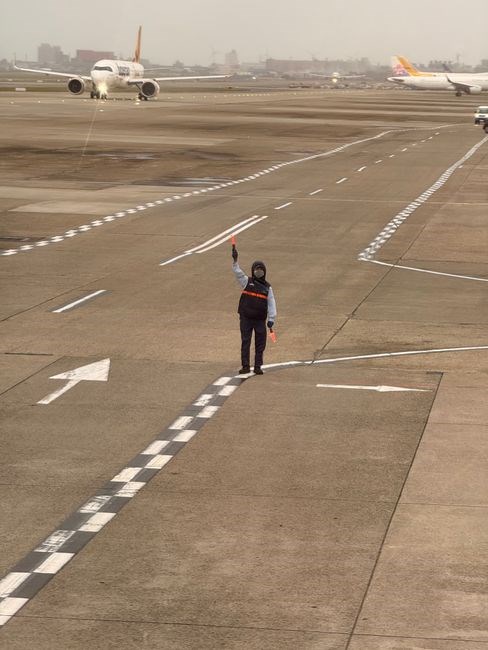
To issue the close‑up signal, the ground guide raises both arms to shoulder height with palms facing upward, keeping elbows slightly bent. The arms are then drawn upward and inward, converging toward the head while the guide maintains a steady, horizontal gaze on the vehicle. This motion should be performed in a single, fluid motion, lasting no more than one second, and repeated if the vehicle does not immediately respond. FM 21‑60 requires the signal to be executed within the 45‑degree forward arc, ensuring that the vehicle operator can clearly see the transition from the neutral position to the close‑up posture. In low‑light conditions, the guide may employ a flash‑light or chemical light stick to enhance visibility, and the signal should be repeated until the vehicle’s movement is confirmed. Training in the 88M12A08‑1 course emphasizes muscle memory and visual clarity, ensuring that the close‑up signal is reliable during convoy operations, obstacle avoidance, and rapid maneuvering. Consistent application of the close‑up signal promotes unit cohesion, reduces collision risk, and enhances overall mission safety. The signal is also used during night operations, where the guide’s hand‑and‑arm posture must be unmistakable to prevent misinterpretation. Mastery of this signal is essential for effective ground guidance across all mission scenarios, ensuring that all personnel can coordinate movements with minimal risk of miscommunication or accident.
2.5 Emergency Stop Signal
When an immediate halt is required, the ground guide performs the emergency stop signal by extending both arms straight out to the sides, palms facing forward, forming a horizontal “T” shape. The guide then quickly pulls both arms upward, palms still facing forward, and holds the position for one second. This motion must be executed within the 45‑degree forward arc and in a single, sharp movement to avoid confusion with the normal stop signal. FM 21‑60 specifies that the emergency stop should be used only when a vehicle is about to collide with an obstacle or when a convoy must break formation abruptly. The guide’s eyes must remain fixed on the vehicle, and the signal should be repeated if the vehicle does not immediately comply. In low‑light or night operations, the guide may illuminate the arms with a flash‑light or chemical light stick to increase visibility. Training in the 88M12A08‑1 course emphasizes muscle memory, timing, and clarity, ensuring that all personnel recognize the emergency stop as distinct from the regular stop. Mastery of this signal is critical for maintaining convoy safety, preventing accidents, and ensuring rapid response to unforeseen hazards during ground operations. The signal is practiced in both day and night drills, and instructors assess compliance through visual observation and timed response metrics. Instructors also employ video recording to analyze hand‑and‑arm positions, ensuring that each signal adheres to the prescribed angle and timing standards set by FM 21‑60. Allpersonnelreviewtheseguidelinesdailymaintainmaintainproficiency.
Training, Equipment, and Integration
Army ground‑guide training blends classroom theory, live‑drill practice, and simulation. Courses like 88M12A01‑1 cover hand‑and‑arm signals, night‑vision use, and coordination with radio operators. Equipment includes signal flags, light sticks, and pyrotechnic flares, all integrated into convoy SOPs. now!!
3.1 Training Methods and Courses
Army ground‑guide visual signal proficiency is built through a structured curriculum that blends didactic instruction, hands‑on drills, and simulation. The core course, 88M12A08‑1 “Ground Guide Visual Signals,” is a 5‑day field‑based program that covers hand‑and‑arm, flag, light‑stick, and pyrotechnic signals. Instructors use a combination of visual aids, live demonstrations, and interactive quizzes to reinforce signal recognition and execution.
Students first review FM 21‑60 and the Army Signal Manual to understand doctrinal foundations. They then practice signal sets in controlled environments, starting with daytime drills that use standard flags and hand signals, progressing to nighttime exercises that require rapid decision‑making and precise signal execution.
Advanced modules introduce integration with radio communications and convoy coordination. Trainees learn to synchronize visual signals with radio call signs, ensuring seamless hand‑off between ground and air units. Scenario‑based training simulates convoy ambushes, low‑visibility terrain, and emergency stop situations, requiring rapid decision‑making and precise signal execution.
Evaluation is continuous: instructors observe signal accuracy, speed, and clarity, providing real‑time feedback. Upon successful completion, soldiers receive a Certificate of Proficiency, qualifying them to serve as ground‑guide officers or convoy commanders. The curriculum is regularly updated to reflect changes in technology, such as the adoption of LED signal panels and portable laser pointers for enhanced visibility.
In addition, the curriculum incorporates joint‑training exercises with allied forces, allowing soldiers to practice signal interoperability across different national doctrines. Field instructors emphasize situational awareness, encouraging trainees to adapt signal use to terrain, weather, and operational tempo. Continuous refresher courses ensure that ground‑guide personnel remain proficient throughout their service, meeting evolving tactical demands!!
3.2 Equipment and Coordination
Ground‑guide visual signal operations rely on a suite of equipment that enhances visibility and reliability. Standard gear includes signal flags (red‑white vertical stripes), signal flares, and portable light‑sticks. Modern units also employ LED panels mounted on vehicles, laser pointers for long‑range signaling, and battery‑powered flashlights with adjustable beams.
Each piece of equipment is selected to meet the specific environmental conditions of the mission—daylight, dusk, night, or adverse weather. For example, the Army’s “Signal Light‑Stick” is a 6‑inch, 1‑amp LED device that can be held at arm’s length or affixed to a vehicle’s bumper, providing a bright, 360‑degree illumination that can be seen from 1,500 feet in clear conditions. Flares, on the other hand, are used for emergency stop or “no” signals and are deployed from a 3‑inch tube to ensure rapid ignition and maximum visibility.
Finally, each signaler receives a competency badge upon successful completion of the course, which is displayed on the uniform’s signaler’s patch. This badge signifies mastery of visual signal protocols and allows the soldier to serve as a liaison between ground units and aviation assets during joint operations for all units joint.
In addition, signalers are trained to adapt equipment to terrain—such as mounting a signal light on a high‑ground vehicle or using a reflective vest to enhance visibility during night operations. The combination of reliable equipment, clear SOPs, and rigorous training ensures that visual signals remain an effective tool for ground guidance across all Army missions.
Finally, each signaler receives a competency badge upon successful completion of the course, which is displayed on the uniform’s signaler’s patch. This badge signifies mastery of visual signal protocols and allows the soldier to serve as a liaison between ground units and aviation assets during joint operations for all units joint